
Best Characters & Tier List Guide
Suikoden STAR LEAP Best Characters & Tier List | Evaluation Guide
At launch, a useful tier list needs more than S and A labels. Compare role, team fit, growth cost, evidence, and check date to choose the character that solves your early-game problem.
Short answer
The best character is the one that fills your current team gap
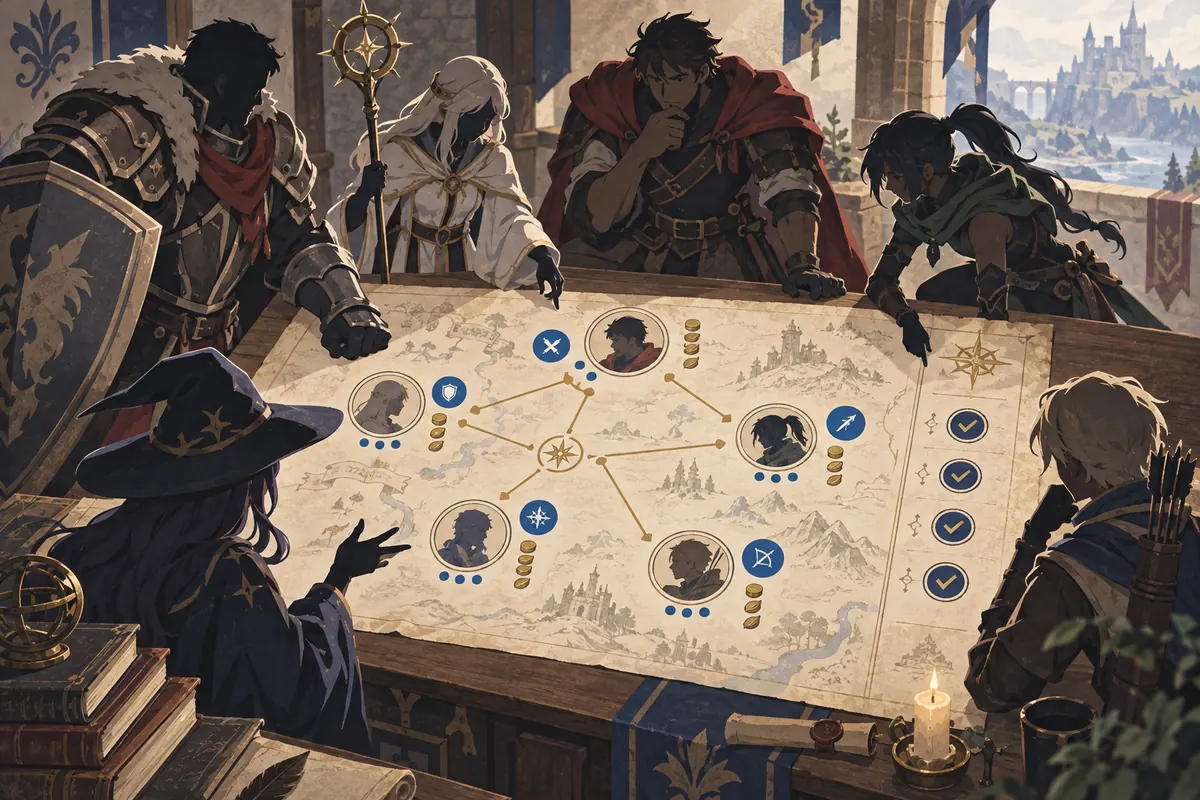
When you search for Suikoden STAR LEAP best characters or a tier list, start with the conditions behind the label rather than the S or A letter. Separate the role shown in the current game screen, fit with your roster, growth materials, and the date the information was checked. Launch-stage details can change, so an unsupported fixed ranking can become misleading quickly.
If you are stuck early, name one reason for the loss. Enemies may survive because damage is missing, the team may fall because durability is weak, recovery may be late, or a skill condition may not fit the encounter. A character that fixes that problem and can be built with your available materials is the best priority for your account at that moment.
- Separate official profile facts from live combat data
- Identify the missing role before comparing character names
- Compare team fit and growth cost with the character's reputation
- Record the target version and check date for rankings or numbers
- Leave unverified multipliers and claims as pending instead of guessing
1. Evaluation boundaries
What to verify before publishing a Suikoden STAR LEAP tier list
A tier list is easy to scan, but it can hide the conditions that make the ranking useful. A player trying to clear early story stages and a player testing a specialized late encounter may value the same character differently. Equipment, bond effects, skill levels, enemy patterns, action order, and acquisition rules also matter. If those fields are not verified, a detailed ranking may look precise without being reproducible.
Keep official identity facts separate from combat observations, and record the screen, version, and date for every later number.
| Field | Useful evidence | Do not assume yet |
|---|---|---|
| Role | Profile, skill text, and a real formation screen | An unverified damage multiplier or universal role |
| Team fit | Attribute, action order, conditions, and ally interaction | The strongest choice for every team |
| Growth cost | Materials, equipment, level, and upgrade screens | Maximum value with minimal investment |
| Acquisition | Summon details, exchange screen, and official notices | Permanent, limited, or returning status without proof |
| Evaluation date | Target version and check date | Old video or another region's screen as current data |
Until the data is stable, labels such as pending, early-game fit, or conditionally strong are safer than a fixed ranking with unexplained certainty.
2. Role and formation
Find the role your team lacks before chasing a best-character label
A roster page can make a famous or high-rarity name feel like the obvious investment. Early progress often works better when you add the role that changes why you are losing. If your damage dealer is already present but the team collapses, durability or recovery may matter more. If the team survives but enemies remain, another support unit may be less valuable than reliable damage or area coverage.
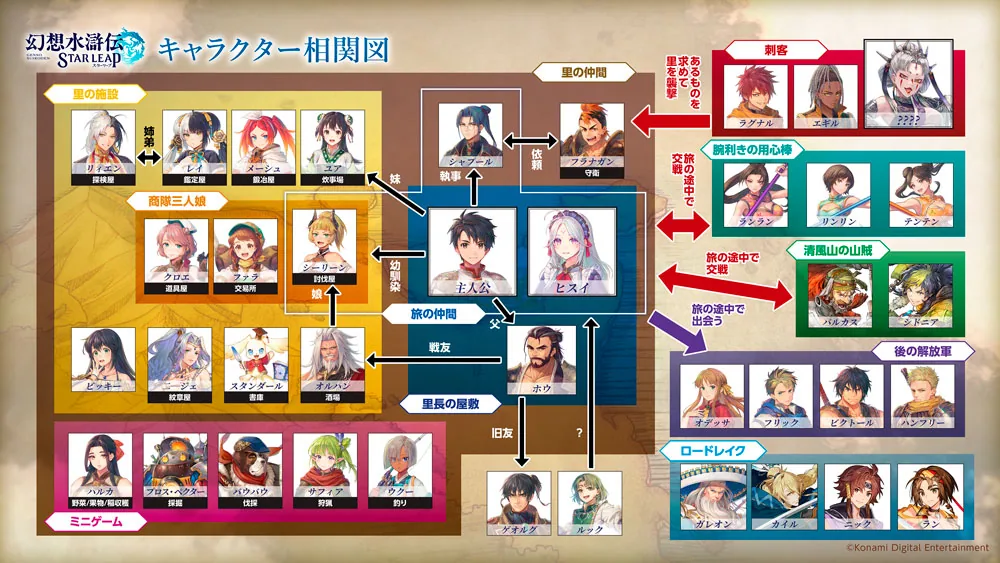
Use the relationship map for identity, then connect each character to a role and growth decision; it is not a combat ranking.
Damage
Check this when enemies survive. Compare single-target or area coverage, conditions, action order, and material cost.
Durability
Check this when allies fall first. Defense, mitigation conditions, and support timing can matter together.
Recovery
Check this when a fight runs long. Look beyond healing size to trigger conditions and turn order.
Special fit
Check a character's value against a specific enemy, attribute, position, or action requirement instead of calling it universal.
Buildability
When value is close, a character that fits your available materials may be the better early investment.
3. Reading tiers
Read S, A, and B labels together with the conditions behind them
A tier label can look like an official power rating when it is shown by itself. In practice, its meaning depends on the content tested, the assumed party size, the investment level, and the enemies used for comparison. At launch, the most useful explanation is often not the letter itself but why a character is placed there and which conditions would lower the evaluation.
Future evaluations will show content, role, fit, cost, alternatives, and check date beside each label.
| Example label | How to interpret it | Question to ask |
|---|---|---|
| S-level | Stable value across several early conditions with few substitutes | Does it fill my gap, and can I build it now? |
| A-level | Strong in a role or formation but dependent on conditions or alternatives | Where does its value increase? |
| B-level | Useful in a narrower case but lower early priority for materials or slots | Is there a low-cost or specific reason to use it? |
| Pending | Skill, acquisition, growth, or environment data is incomplete | What evidence would change the evaluation? |
S, A, and B are editorial labels, not official titles. Always show the target content, date, version, and unresolved questions nearby.
4. Search-intent boundaries
Keep the tier list separate from reroll, gacha, and character-list decisions
Best-character searches overlap with reroll, gacha, and roster searches, but the decision is different in each case. Reroll asks whether to keep a starting account. Gacha asks whether to spend or save resources on a current banner. A character list answers who appears and how the cast connects. A tier list compares roles and conditions under a stated evaluation method. Separate pages can serve those intents without repeating the same vague claim.
Use reroll for keep decisions, gacha for banner resources, the roster for profiles, and this page for conditional role comparisons.

Roster
Use it for names, relationships, profiles, and confirmed identity or role details.
Reroll
Use it to decide whether the first account is worth keeping, including account and reset conditions.
Gacha guide
Use it to read current banner conditions, pull-or-save decisions, and post-pull resource planning.
Tier list
Use it to compare role, fit, growth cost, alternatives, version, and evaluation conditions.
5. Updates and practice
Review five items before moving a new character up a tier
A new character does not automatically replace an established early-game unit. Read the current profile and skill text, then compare the problem your formation actually has. Even when a new character solves that problem, the materials, equipment, and time needed to build it may make an immediate swap inefficient. A good update explains the reason for the change instead of only changing a letter.
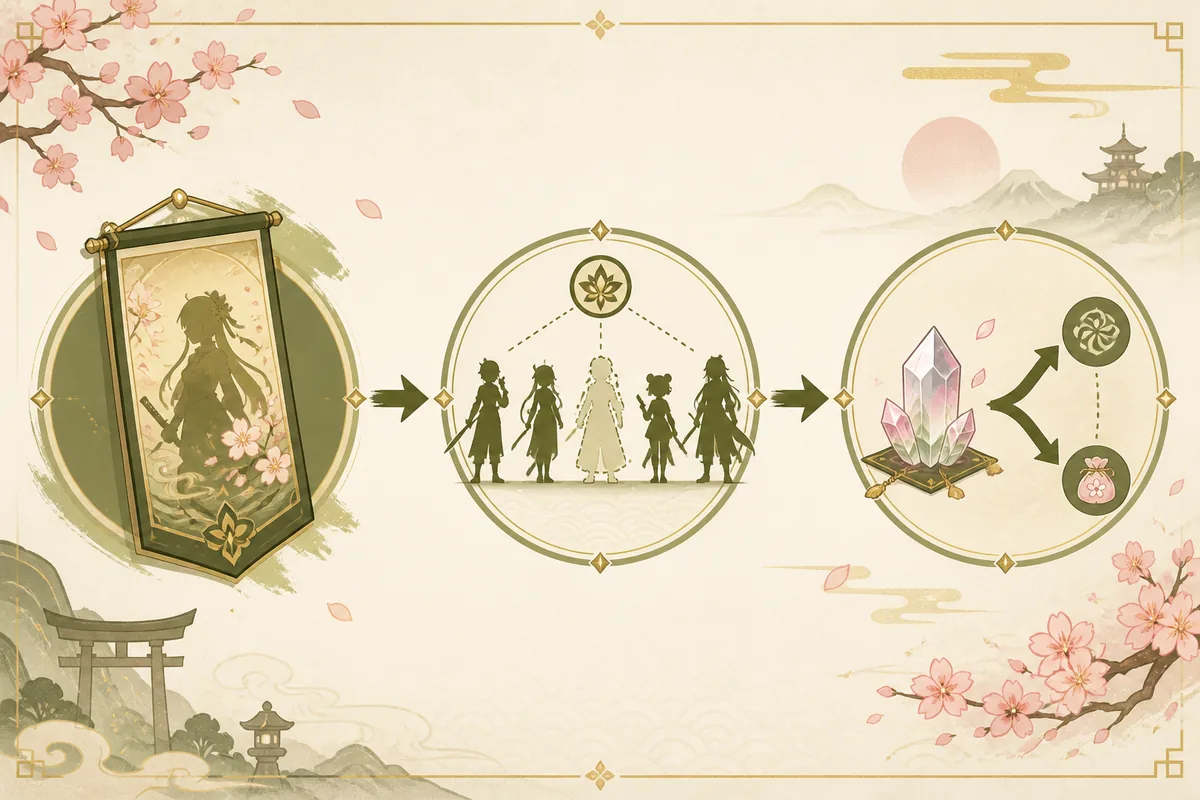
Record the date, version, screen, role, alternatives, and unknowns so updates remain auditable.
-
1
Record the version
Check the in-game notice or profile screen and save the target version and date.
-
2
Name one role
State whether the character is being compared for damage, durability, recovery, support, or a special condition.
-
3
Compare the actual loss
Test whether the character solves the reason your current stage or encounter is failing.
-
4
Check the investment
Review materials, equipment, skills, party slots, and the time needed to make the unit useful.
-
5
Keep alternatives visible
Record similar roles, conditional strengths, and unknown numbers so the conclusion is not too rigid.
Official videos and profile images help identify the game and characters. Their visual impression should not be used as proof of a combat ranking.
6. Early-game practice
Judge whether the whole party works before chasing one character's rank
A single best-team answer becomes fragile when your roster or enemy conditions change. Separate the main damage role, defensive layer, recovery or support slot, and a conditional answer. Invest first in the slot blocking progress. Concentrating materials on the reason for the loss is usually more adaptable than leveling every character at the same speed.
These are decision examples, not official formations; compare availability, cost, and role coverage before replacing a unit.
| Early goal | Role to inspect first | Decision note |
|---|---|---|
| Clear story safely | Main damage plus durability | Check clear speed and survival together |
| Handle groups | Area coverage plus support | Verify target count, conditions, and action order in-game |
| Survive longer fights | Recovery plus defense | Compare timing and material cost, not only healing size |
| Save materials | Replaceable role | Build one main team before widening the roster |
| Test a new character | The current missing slot | Compare one role before removing an established unit |
When the answer is not yet one fixed name, the reason for the evaluation and the unknowns are part of the guide's value.
FAQ
Questions about Suikoden STAR LEAP best characters and tier lists
Who is the best character in Suikoden STAR LEAP?
Identify the missing role, then compare fit, growth cost, and target version instead of choosing one name without conditions.
Should I always build an S-tier character?
No. Content, investment, formation, and check date matter; an S-level unit that misses your gap may not be the next priority.
Is the character list the same as a best-character ranking?
No. The roster gives identity and profiles; a ranking compares uses under stated conditions rather than turning story importance into combat strength.
How should I use a tier list during rerolling?
Use reroll guidance for account conditions, then ask whether the result fills an early-team gap and can be developed.
Will a new character immediately change the tier list?
Not automatically. Verify skills, acquisition, materials, enemy fit, substitutes, version, and date before changing a tier.
Why does this guide avoid unverified multipliers?
Launch screens and regional conditions can differ, so check live game text and official notices before fixing numbers in a ranking.
Official sources and related pages
Use KONAMI's official pages for the game name, character profiles, relationship map, and first-party notices. Use the current in-game display and official notices for combat and banner details.
- KONAMI official Suikoden STAR LEAP siteOfficial product information, notices, and distribution links.
- KONAMI official character pagePublished character profiles and the official relationship map.
Summary
Start with evaluation conditions, not a ranking letter
For Suikoden STAR LEAP best characters and tier lists, compare role, team fit, growth cost, acquisition, target version, and check date. Use the character that solves your next problem, keep reroll and gacha decisions on their own pages, and leave unsupported numbers pending.